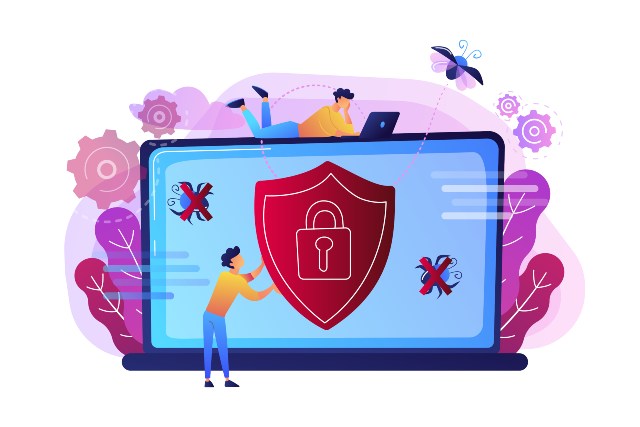
Modern businesses face a significant danger: cybercrime. With all business transactions moving online, cybercriminals are getting smarter each day, constantly finding new ways to exploit software vulnerabilities. But how can you keep your business safe from cybercrime? 

Here we shares simple tips and basic steps to protect your business. These best practices for cybersecurity work for any business, no matter its size, location, or industry.  

While you can’t completely stop cyber-attacks, following these good cybersecurity practices can help reduce their impact. They make sure that cybercriminals can only do minimal damage, and your business can recover more quickly. 
Best Practices for Ensuring Online Business Security 

Safeguard Your Passwords 

Utilizing passwords appropriately is an economical and straightforward approach to safeguarding your devices from unauthorized access. However, there are various considerations to contemplate in order to diminish the risk of cybercrime associated with password usage. A recommended tactic involves establishing a password for accessing company systems. This could encompass a PIN or, ideally, biometric authentication methods such as fingerprint or facial recognition. Incorporate built-in encryption across all your devices, ensuring proper setup and configuration. Prior to usage, always modify the default manufacturer password on any devices. Furthermore, it’s prudent to routinely alter passwords, especially if your business experiences a substantial workforce or frequent employee turnover. 

Train your staff 

Your business security risks don’t just comprise of the hardware and software you use; the people who use it are the ones most likely to put your business at risk. Ensure they are aware of cyber security risks, as well as how to help protect your business: such as how to recognize email phishing scams, using intelligent passwords and general information security. Educate them on the importance of the information they handle to help reduce exposure to the business.  

Ensure systems have appropriate firewall and antivirus technology  

This applies to both new and existing technology. Take some time to evaluate the security settings on the software you utilize in your business, which will include web browser and email programs. When selecting new software, make sure you choose system options that meet your business needs without increasing risk. 

Use the tools available to you 

There are a lot of tools out there to help keep your business safe and protected from cyber-criminals. Make use of them. Some of the most used tools are: 

  • Password managers: These generate long random character passwords for new applications, and remember them so you don’t have to 
  • Multi-factor authentication: This is where you enter a code from another device, to prove it’s really you logging in 
  • VPNs: A Virtual Private Network gives you a secure connection to your business when working remotely 
  • Encryption: This makes the content of your devices look like thousands of random characters to anyone without the encryption key. So, it’s only a minor inconvenience if you lose a device, not a major catastrophe 

Backup all data, all the time

Keeping a copy of all your data in this way is your fall-back option. If anything ever goes wrong and your data is lost, corrupted, or held to ransom, you retain a copy of everything you need to keep your business functioning. If you already have off-site back-up in place, well done. Now check that it’s working as it should be. This is a process known as verification, and it needs to be done every day. 

Keep in mind that malware can infiltrate any connected storage device. Hence, it’s vital to ensure that your backup solution isn’t constantly linked to your primary device holding the original data. This backup device could be a USB drive or an additional computer storage. Regardless of its type, it should remain inaccessible to your staff and should not maintain a prolonged connection to the main computer. 

In conclusion  

Here are a few essential cybersecurity guidelines you should follow to manage the potential impact of any cyber attack. Additionally, enhancing your overall cyber resilience requires well-structured incident response plans. If you’re genuinely committed to your organization’s cyber well-being, it’s worth contemplating the engagement of a cybersecurity expert. They can evaluate your readiness for breaches and assist in refining your incident response plans, processes, and protocols.